The Toy Train Ride A Trip to Mithilanchal
From brightly coloured figures to patiently crafted borders—the Madhubani painting from Bihar is all about celebration and devotion. Walking gently on her soil, she tells and retells History. No wonder, the enchanting Madhubani Art has traveled across many ages to reach you today! Folktales from the great Hindu epic Ramayan describe the auspicious birth of ‘Shree Sita’ from the sacred soil of Mithila. And ever since then, the land never lost its sweetness.
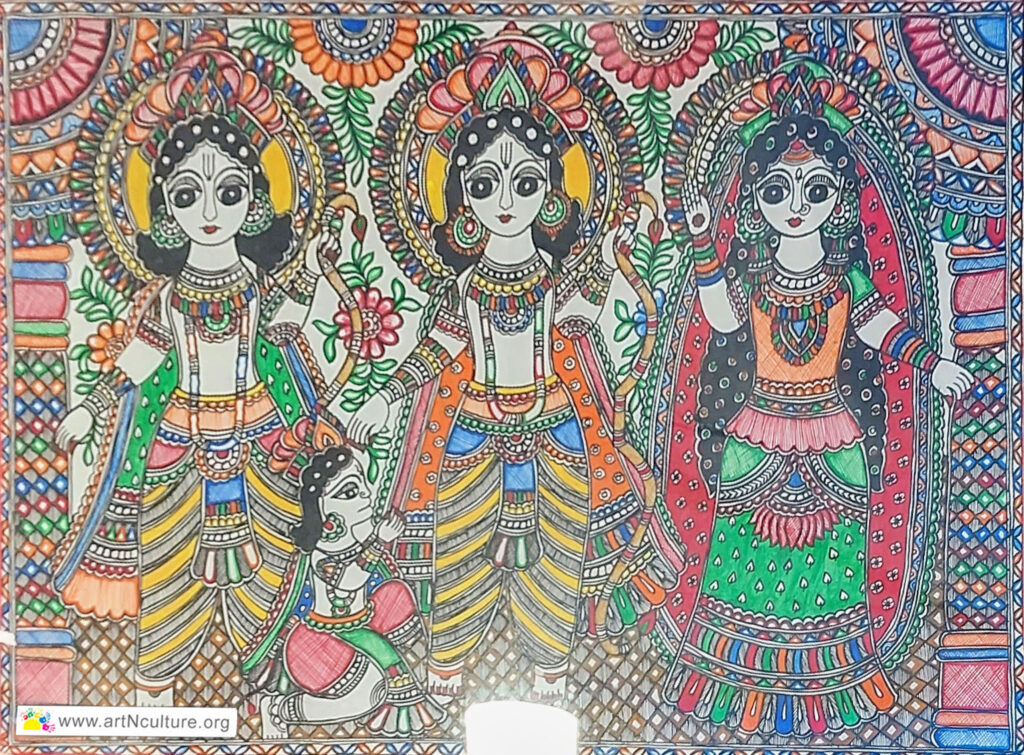
The kingdom of Mithila holds Janakpuri, a town in present-day Nepal, as her capital. And our story of Madhubani painting begins in this land of true intellect. The Art often depicts celebrated motifs of Ram-Sita Vivaah and Illustrations of Shiv Parvati and Radha Krishna– all of which symbolize eternal love. Back then, Madhubani paintings decorated the entire city of Janakpuri– an expression of selfless devotion and regard the Townsmen had for Shri Ram and Sita. Even today, creating a Madhubani on auspicious occasions like marriage is regarded as very pure. Madhubani is the combination of two words. Madhu (which means honey) and Van (which means forest). When put together, they are a green forest of fresh honey. Honey, in Bhartiya Gyan Parampara, has special significance. It stands for eternal sweetness and good luck. While bees hum the message of cooperation to the world.
Do you know a large Madhubani painting with fine details can take as long as thirty-five days to finally complete?!
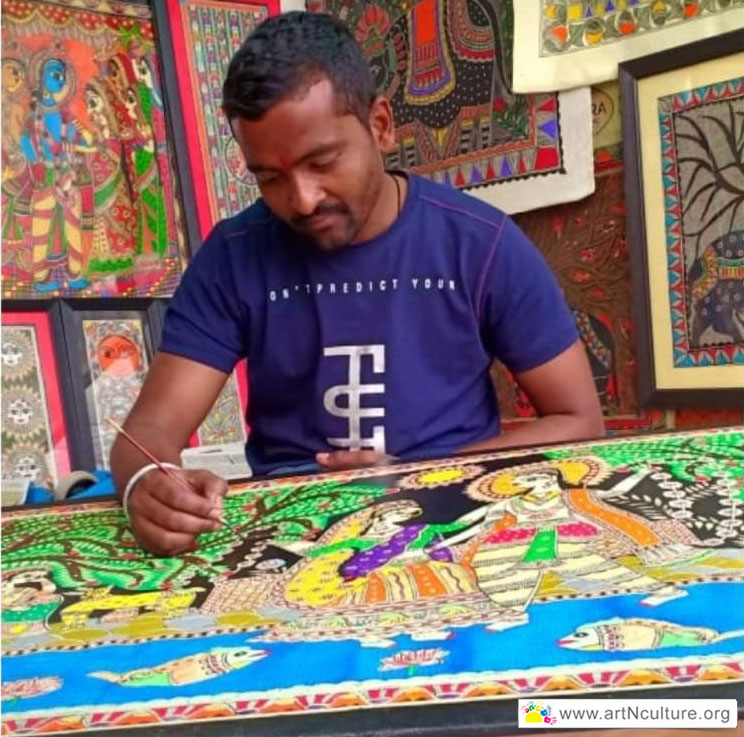
“Jitwarpur,” says Shri Santosh Paswan, a celebrated Madhubani artist from the art’s own land, “is the birthplace of Madhubani painting.” This rural village in the Madhubani district wakes up every day to a colourful morning. And express their heartfelt gratitude to Mother Earth. Madhubani, he says, is painted to honor every little thing we receive from Nature. Trees, animals, birds and flowers are beautifully shown and hold special symbols.
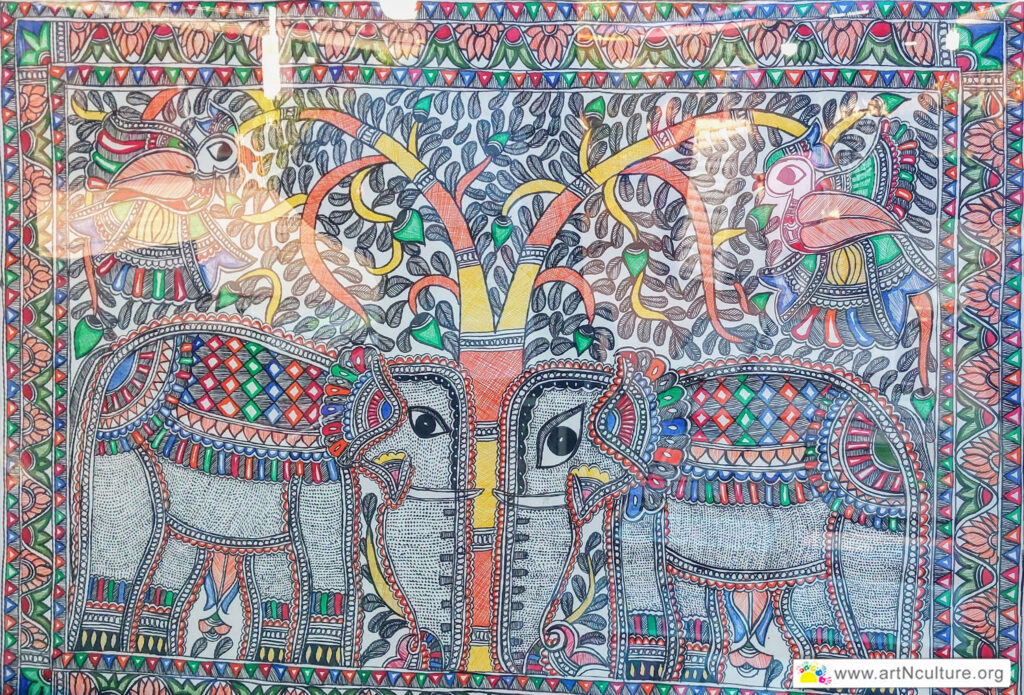
If you ever get a chance to observe the Art closely, you must notice the occurrence of natural motifs. The ‘Kalptaru Vriksh’ that features in such Art represent long life. Animals like cows symbolize innocence and purity. While elephants stand for strength. Here,
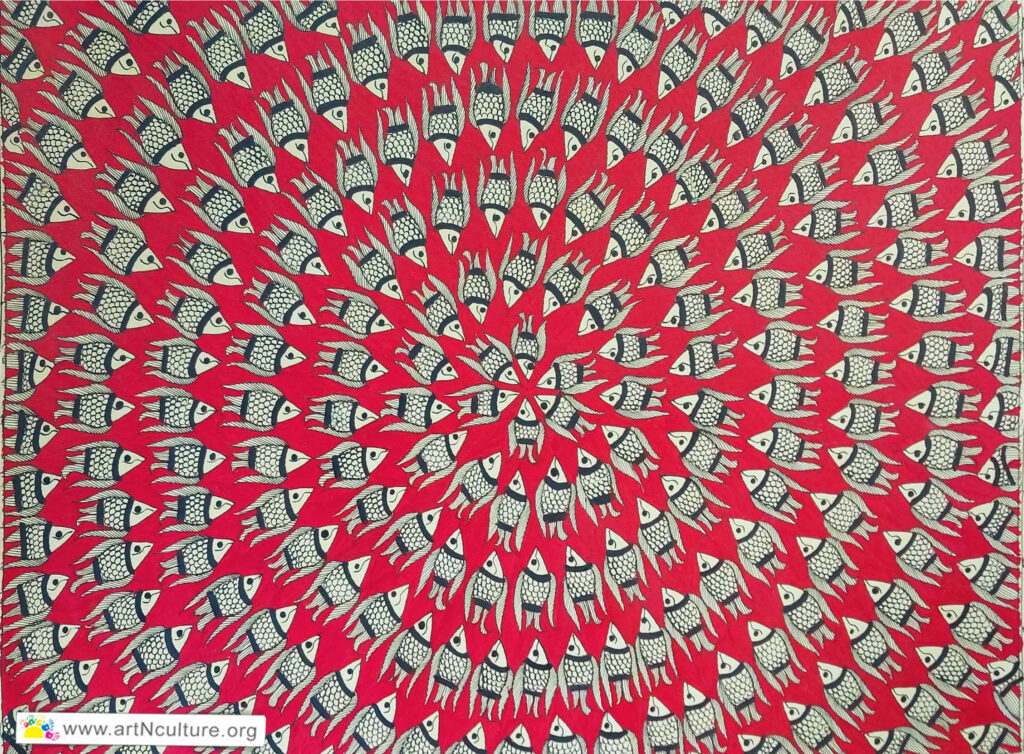
peacocks bloom with the message of good health. And fishes float all over the Art as messengers of good luck! Every symbol is the artist’s way of giving back to the Earth— the present of hope, of magic.
Madhubani as an art has always been practiced in five distinct styles:
- The Kanchani Style creates geometrical patterns and forms double lines to highlight the subject. Techniques like hatching and cross-hatching are used to fill up spaces– all in one single colour.
- The most important feature of Bharni Style is that it leaves no empty spaces and themes are put on canvas in a colourful venture.
- The Kohbar Style depicts wedding themes and uses symbols auspicious to the same.
- Tantric Style of Madhubani paintings focuses on divine and devotional themes.
- Believed to be the first tried, Godna Style paints motifs like tattoos and they essentially do not carry a border.
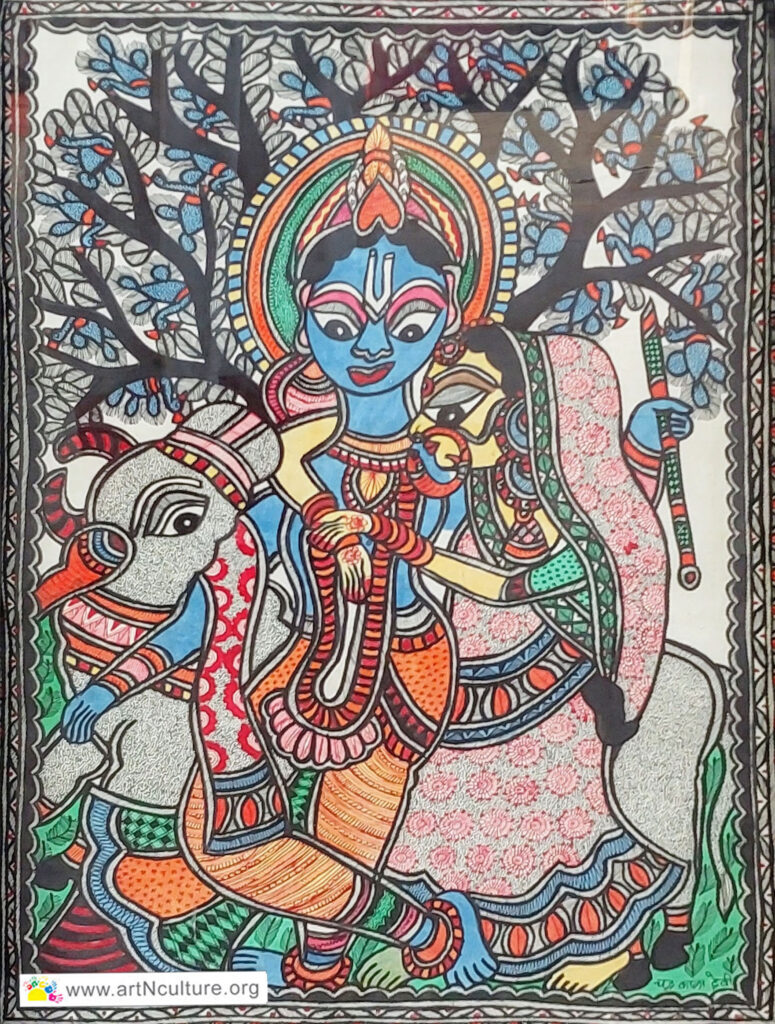
Every Indian folk art is an inspiration to the rapidly developing, modern world. That slowing down can be a great idea. That gratitude must not only be felt but expressed too!
We as artists pledge before these coarse, organic hand-pressed sheets and naturally extracted colours, that Earth, with our art, shall always flourish. Madhubani paintings have always educated people to protect trees and respect nature in the most creative way!
So preparations here are always celebrations! As you walk down colourful gardens under the fresh bright sun, flowers like Palash and Kusum jump into your bamboo baskets– ready to share their colours! A bucket of mixed fragrances!
Madhubani gets her colours from these dancing flowers and leaves, which when dried and crushed, mix with the gum of the Babool tree to finally have the perfect texture!
The authentic Madhubani paintings are made up of natural brushes. Twigs from dry coconut brooms are neatly shaped. Cotton shreds are then twisted on the stick– and look, the brush is ready!!
Madhubani is Mother Earth’s loving child.
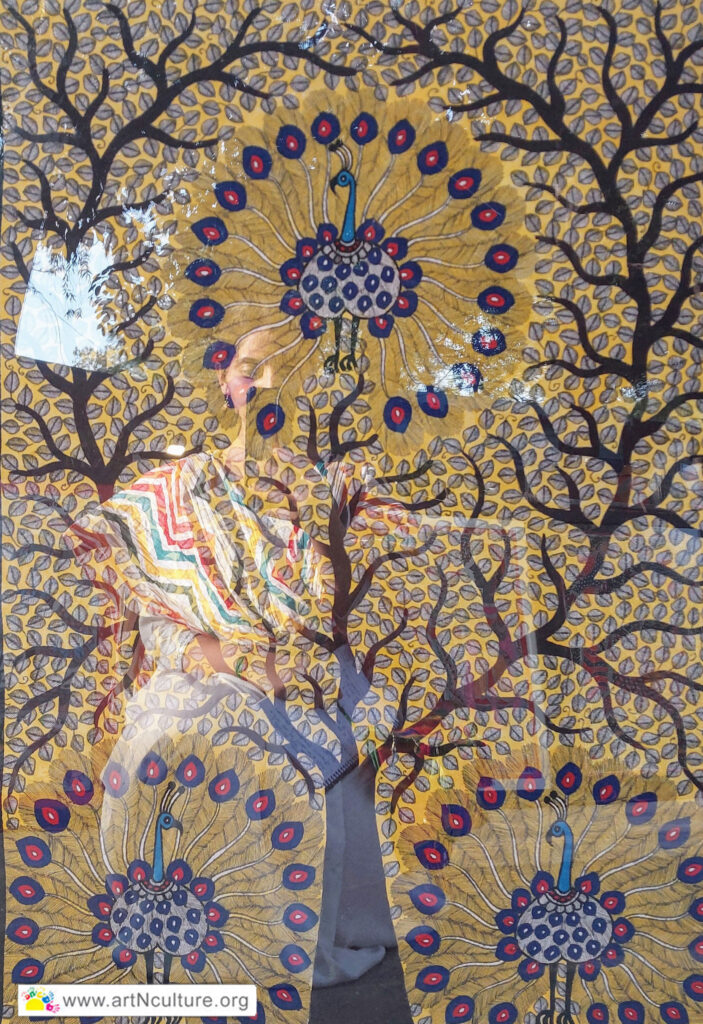
As we now get into the final making of this age-old craft, let’s begin with borders. Borders are neatly drawn. It is important to note that they have no breakages. Just clean lines enclosing the space!
Geometrical patterns like triangles, circles and lines are essentially used in borders. The rhythm they carry invites positive energies to the artist’s workspace.
Madhubani, like any other Indian Art does not have realistic representations. There are no perspectives either! However, symbols are master storytellers. Every motif is meaningfully placed so that the entire painting conveys a message or a story. Master artist Prabhat believes that Madhubani paintings should never be preplanned. Once the borders are neatly done, the inner space should be a clear reflection of the artist’s emotion. Madhu Lal, who runs her entire family by painting and selling beautiful Madhubani Art says that— whenever she has a fight back home and she sits down for a painting– her Radha can never smile.
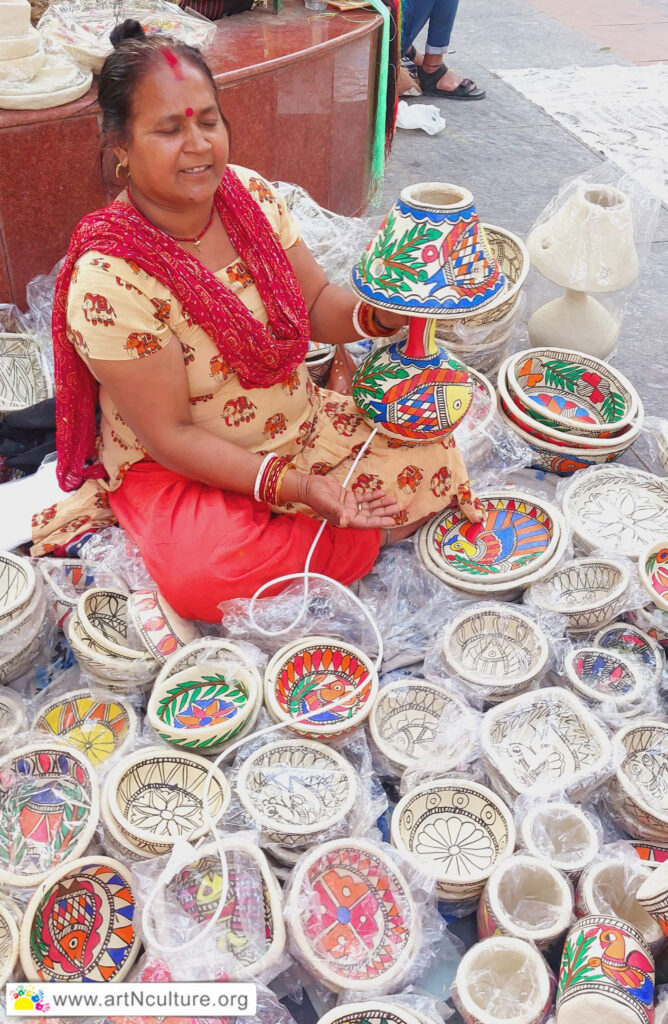
The painting that was originally meant to decorate huts, today, has a worldwide presence. She shines on your favorite dresses and decorates empty canvases. It is wonderful to note how to paper mache joins hands with Madhubani to breathe back so much life and celebration into the colourful Indian culture. Art for a cause!
A True artist adds beauty to the Earth by their art. And Presents before the world, the picture of a caring humankind.
Let’s be kind!
Let’s spread love!
Let’s learn Madhubani!!!

